


Safeguarding
Keeping our children safe is our highest priority.
At Aspire Schools, the health, safety and well-being of every child and young person is our top priority. We expect all staff, trustees and volunteers to share this commitment to safeguarding our students.
 Safeguarding DURING SCHOOL HOLIDAYS
If you have any safeguarding concerns during the school holidays, please do not hesitate to contact us by email to DSL@aspireap.org.uk or the Buckinghamshire Safeguarding Children’s Partnership on 01296 383485 or the out of hours emergency duty team on 0800 999 7677
Our Safeguarding Commitment
We listen to our students and take what they tell us seriously. All school staff have regular safeguarding training and help the young people build safe relationships, so they always have someone to talk to if they have any concerns. Staff are trained to understand safeguarding risk factors and are required to report these to the Designated Safeguarding Lead (DSL) or the Deputy Designated Safeguarding Lead (DDSL) if seen. We know that all behaviour is communication and use our professional curiosity to stay alert.
We safeguard and promote the welfare of children in line with:
- Keeping Children Safe in Education (KCSIE 2025)
- Working Together to Safeguard Children
- Prevent Duty (Counter-Terrorism and Security Act 2023)
What Safeguarding Means
Safeguarding is the action you take to promote the welfare of children and protect them from harm.
Safeguarding means:
- Protecting children from abuse and maltreatment.
- Preventing harm to children's health and development.
- Providing early help and support to meet children's needs when problems emerge.
- Ensuring children grow up with safe and effective care, within their family where possible.
- Taking action to make sure that all babies, children and young people have the best outcomes.
In schools this means:
- Protecting from harm: Shielding students from physical, emotional and sexual abuse, neglect, bullying, grooming, exploitation (including online) and responsible technology use.
- Promoting well-being: Ensuring children's health (mental & physical) and development, providing support for those with special needs or difficult backgrounds.
- Creating a safe environment: Implementing whole-school policies, secure buildings, emergency procedures, and ensuring staff are trained to identify and report concerns.
- Preventing radicalisation: Protecting students from extremist views or radicalisation.
- Working with external agencies: Collaborating with social services, police, and other partners when significant harm is suspected.
Child protection is part of the safeguarding process. It focuses on protecting individual children identified as suffering, or likely to suffer, significant harm. It includes specific procedures for responding to concerns, making referrals, and working with statutory agencies.
Our Safeguarding Team
Please refer to the safeguarding team information below. If you are unsure who to contact, please email DSL@aspireap.org.uk.
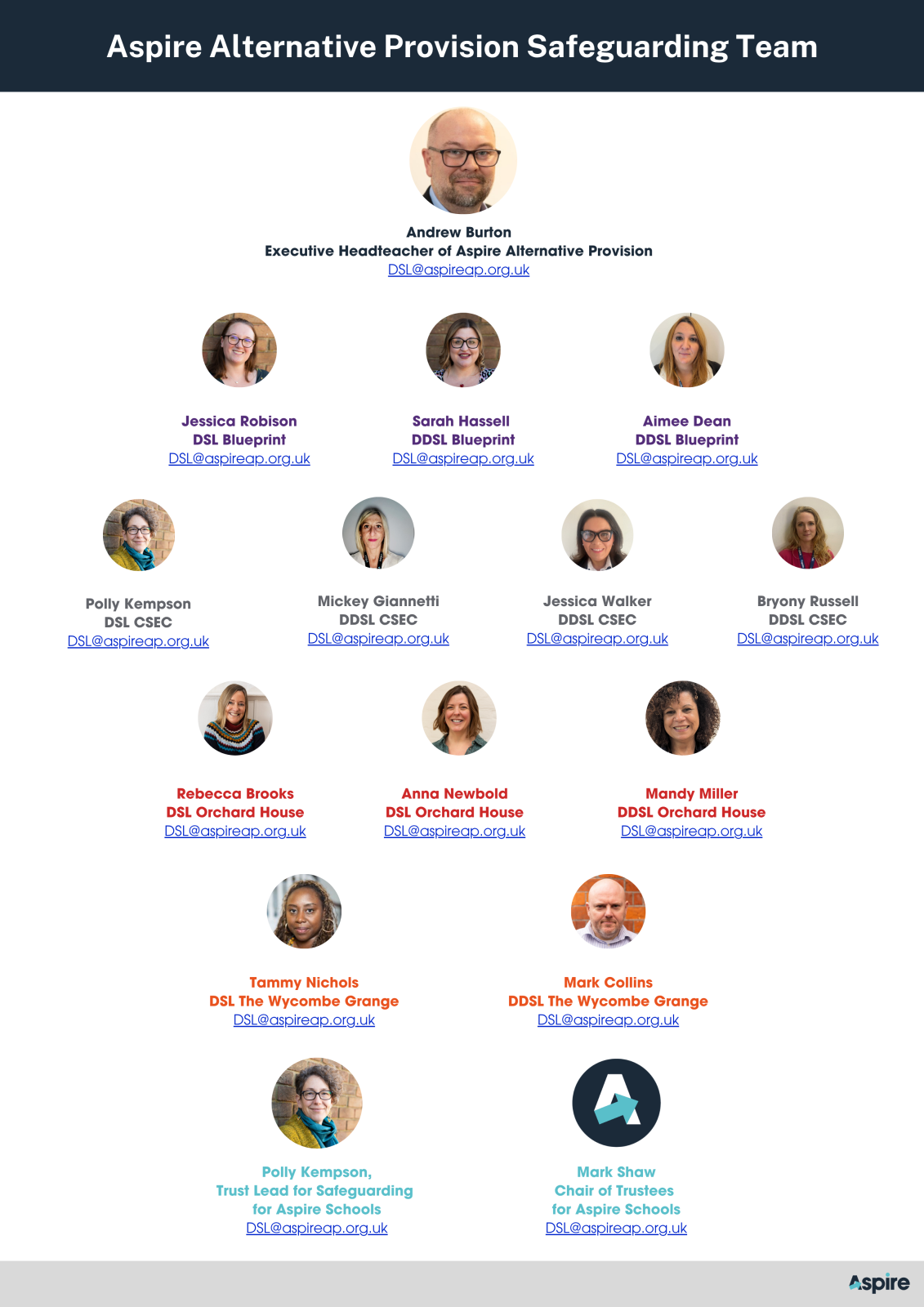
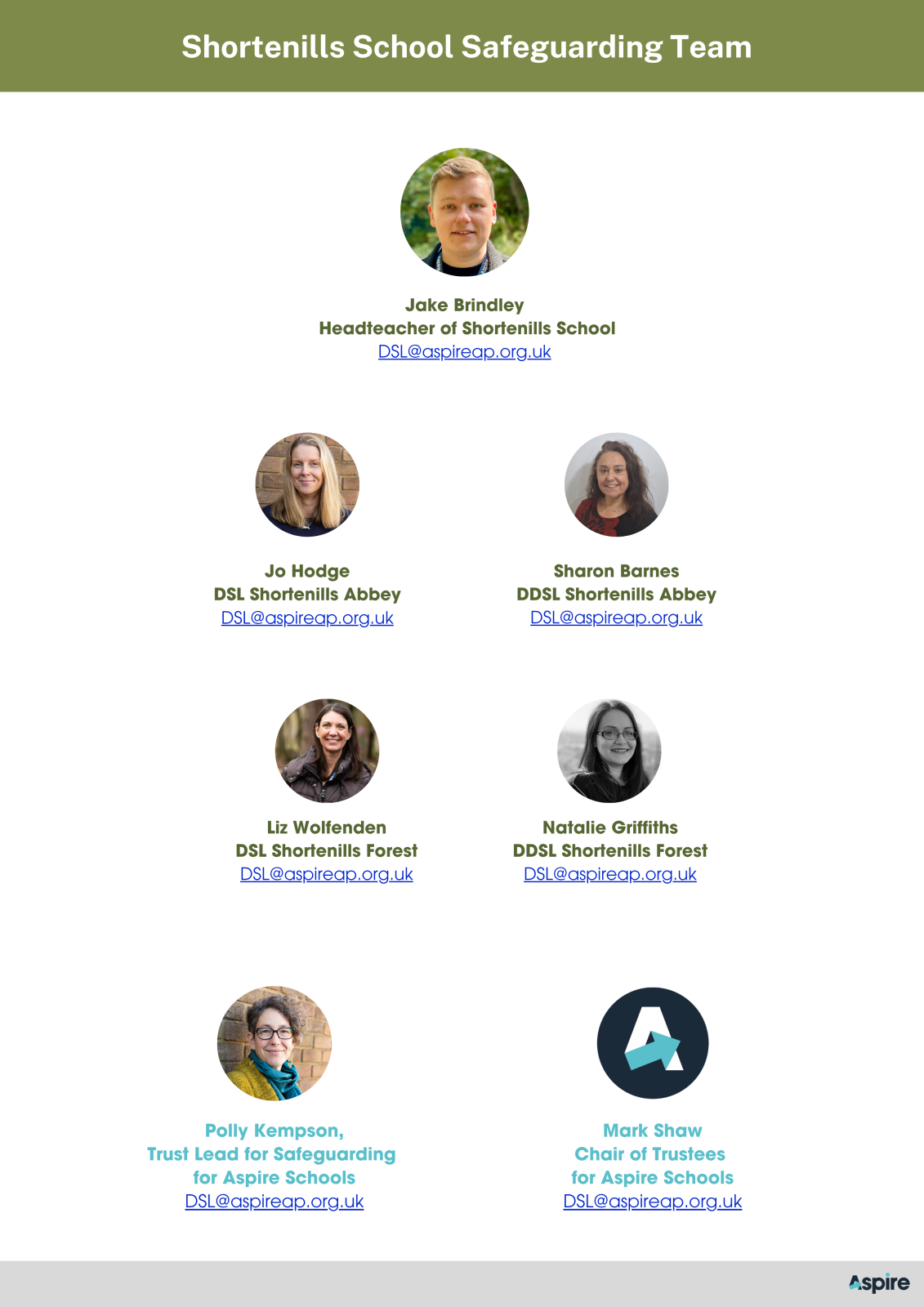
Reporting a Concern
If you are a parent, carer, visitor or concerned member of the public and you have a safeguarding concern, please use the button below to be directed to a form for you to complete.
Parents, carers, or students:
- Contact the DSL or DDSL by phone or email.
- Speak to any member of staff you trust.
Staff or external professionals:
- Report concerns directly to the DSL or DDSL
- Use the Whistleblowing Policy for unsafe practices.
Emergency contacts:
- Local Authority Children’s Services: 01296 383962 between 9:00 am to 5:30 pm Monday to Thursday, 9:00 am to 5:00 pm Friday.
- Emergency Duty Team: 0800 999 7677 before 9:00 am, after 5:30 pm (5:00 pm on a Friday) or at weekends
- NSPCC (adults): 0808 800 5000
- Childline (pupils): 0800 1111
- Police (emergency): 999
- Police (non emergency): 101
Policies and Guidance
Links to our Safeguarding policies can be found in the statutory and key information pages on our website.
How We Keep Students Safe
- Designated Safeguarding Leads (DSLs) and Deputy Designated Safeguarding Leads (DDSLs): Each school has a DSL and DDSL who responsible for managing safeguarding concerns.
- Safer Recruitment: Robust vetting and background checks for all staff, with a Single Central Register maintained.
- Staff Training: All staff receive regular safeguarding training and updates.
- Site Security: Controlled access to the premises and established lockdown and emergency procedures.
- Visitors: All visitors sign in at reception, receive safeguarding information, and are supervised where required.
- Policies and Procedures: Clear codes of conduct and child-centred safeguarding policies.
- Curriculum: Teaching pupils about personal safety, relationships, and online risks (RSHE).
- Child-Centred Approach: Listening to pupils and prioritising their needs.
- Record Keeping and Reporting: Concerns are reported promptly and recorded securely.
- Early Help: Identifying concerns early and providing support before issues escalate.
- Online Safety: Measures to protect students from digital harm and inappropriate content.
- Safeguarding Interventions and Workshops: Supporting pupils to recognise and report concerns.
- Working with External Agencies: Collaboration with police, local authorities, and other professionals.
- Whistleblowing: Clear procedures for reporting concerns about staff conduct.
External Support and Resources
Aspire School works closely with a variety of multi agency teams and professionals:
Local Support Services
- CAMHS – Child & Adolescent Mental Health Service Buckinghamshire That provides emotional and mental health support for children and young people up to age 18, including assessment, therapy, crisis support, and specialist teams.
- Youth Justice Liaison and Diversion Service – Oxford Health CAMH Supports young people (under 18) involved in offending behaviour or police contact by identifying unmet needs and linking them with appropriate services.
- Buckinghamshire Safeguarding Children Partnership BSCP The local multi-agency partnership bringing together agencies (council, police, health, etc.) to protect children through collaboration, training and shared safeguarding practice.
- Buckinghamshire Sexual Health and Wellbeing Service (bSHaW) – Brook & NHS Offers free sexual health advice, STI testing, contraception support, and wellbeing services for all ages in Buckinghamshire, with dedicated support for young people.
- Operation Encompass A national initiative that ensures schools receive early notification of domestic abuse incidents involving children so they can offer timely support and safeguarding.
-
Aspire Schools - Operations Encompass
download_for_offline
download_for_offlineAspire Schools - Operations Encompass
Online Safety and Digital Awareness:
General Online Safety:
- ThinkUKnow - Education programme from NCA-CEOP protecting children online and offline CEOP - Online Safety
- Childnet - Resources for young people, parents, and schools
- NSPCC - Advice on staying safe online
E-Safety Information:
- The E-Safety Adviser Newsletter - Regular advice exploring different online safety topics
- Virgin Media – Children’s Online Safety Test - Helps families understand online risks
Social Media and Online Behaviour:
Social Networking:
- ConnectSafely - By parents, for parents: A growing collection of clearly written guidebooks that demystify apps, services and platforms popular with kids and teens.
Cyberbullying:
- Childline - Bullying & Cyberbullying
Sexting:
- NSPCC - Sexting
- Childnet - Sexting
- Family Lives - Sexting Advice for Young People
Online Gaming:
-
NSPCC - Online Games
Selfies and Online Images:
-
ThinkUKnow - Nude Selfies: Parents’ Guide
Viral Content and Online Scares:
-
ThinkUKnow - There’s a Viral Scare Online. What Should I Do?
Health and Wellbeing Support:
Mental Health and Emotional Wellbeing:
- Young Minds - Information on mental health and self-harm for students and parents
- RCPSYCH - Physical Activity & Mental Health How exercise supports wellbeing
- Moodjuice Anxiety - Self-checks and coping strategies
Eating Disorders:
- Beat Eating Disorders - Online help and links to specialist organisations
- NHS – Eating Disorders - NHS guidance and support
Substance Use and Behaviour Support:
- We Are With You - Support for drug, alcohol, and mental health concerns
- Talk to Frank - Advice and support on drugs
- Prevent Duty - Channel is a key part of the Government’s Prevent Strategy which aims to stop people from being drawn into terrorist-related activity.
Bereavement and Crisis Support:
- Cruse Bereavement Care - Support after the death of someone close
- Samaritans - Confidential support, anytime, about whatever’s troubling you
- Childline - Free, private support for children and young people up to age 19
This page was last updated on 13 February 2026


